Home › Commercial Retaining Walls
Superior Masonry Atlanta constructs engineered commercial retaining walls for sites around Atlanta, GA. We build CMU, concrete, and brick walls according to plans, integrating drainage, geogrid, and reinforcement to support parking lots, drives, and landscapes safely.
Superior Masonry Atlanta provides professional commercial masonry retaining walls throughout Atlanta, GA, Georgia and the surrounding area. Our licensed, insured crew delivers safe, clean, on-time work with a free estimate before anything begins. Call (912) 454-5836 or request your free quote.
Commercial Masonry Retaining Walls for Atlanta Properties
Superior Masonry Atlanta designs and builds commercial masonry retaining walls that stand up to Atlanta’s red clay soils, heavy summer storms, and daily use on busy sites. We focus on structures that are both functional and attractive, so your wall can support slopes, protect foundations, and still match the look of your property.
Our team works with property managers, general contractors, and owners across the Atlanta metro area on new construction, expansions, and remedial wall replacements. Whether you are stabilizing a parking lot, creating level pads for new buildings, or cleaning up a long standing erosion problem, we plan each retaining wall according to real site conditions instead of forcing a one size fits all system.
Because commercial projects often affect drainage and neighboring properties, we pay close attention to local codes, stormwater requirements, and inspection standards in Atlanta and surrounding jurisdictions. The result is a retaining wall that satisfies inspectors, protects your investment, and reduces long term maintenance headaches.
How We Plan and Engineer Your Commercial Retaining Wall
A successful commercial masonry retaining wall in Atlanta starts with a careful site assessment. We walk the property with you, review grading and civil plans if available, and check slopes, access, and existing structures. We look at how water currently moves across the site, where runoff is collecting, and how construction traffic or heavy equipment will reach the wall area.
Next, we coordinate with your engineer or, if needed, help you connect with a structural or geotechnical engineer familiar with Georgia clay conditions. Together we determine wall height, expected loads from vehicles or buildings above, and soil properties. On many commercial jobs, especially over 4 feet in exposed height or supporting traffic, stamped engineering is required for permitting and insurance. We make sure the design accounts for surcharge loads from parking lots, drive aisles, or stored materials that might sit near the top of the wall.
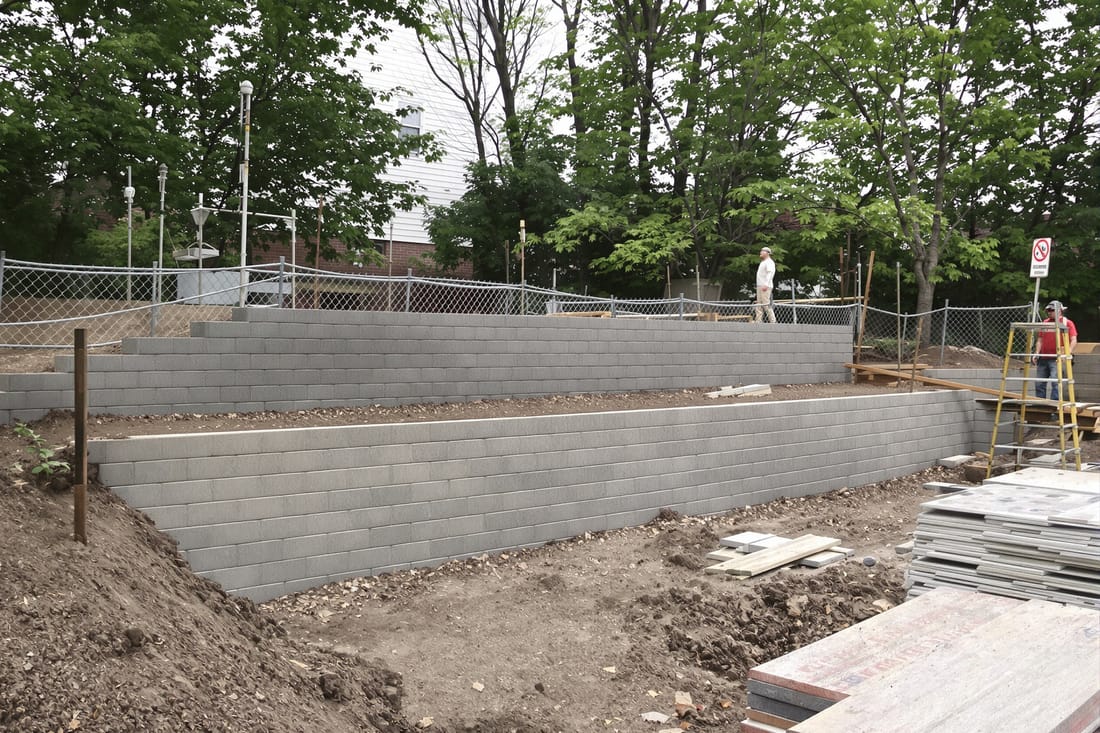
We then choose an appropriate wall type, such as reinforced CMU (concrete masonry unit) walls with concrete footings, segmental block retaining systems with geogrid reinforcement, or gravity block walls for shorter conditions. Before any excavation starts, we confirm utility locations through 811, coordinate staging areas, and plan a construction sequence that fits your project schedule and keeps other trades working efficiently on site.
Material Options and Finishes for Commercial Masonry Retaining Walls
Commercial masonry retaining walls do not have to look like plain gray blocks. Superior Masonry Atlanta offers several material and finish options that hold up to Atlanta’s weather while maintaining a professional appearance.
Reinforced CMU walls are common for high walls or where architectural finishes matter. These walls use hollow concrete blocks stacked on a concrete footing, with vertical and horizontal rebar placed inside and concrete grout pumped into the cores. The face can be left smooth, painted with commercial grade coatings, or covered with brick or stone veneer to match nearby buildings.
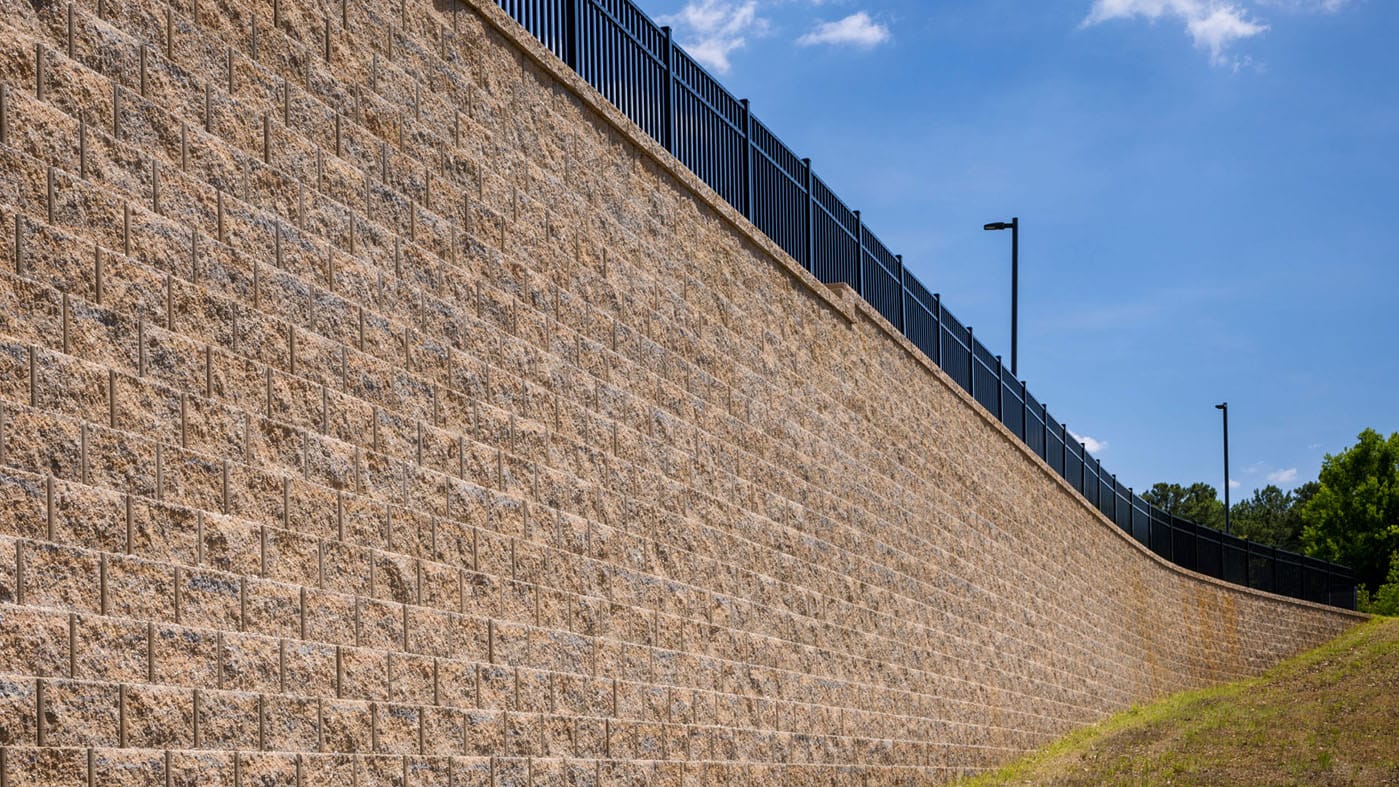
Segmental retaining wall (SRW) systems use interlocking concrete blocks specifically designed for earth retention. They are ideal for stepped terraces around retail centers, multifamily developments, and institutional campuses. Color options range from earth tones that complement red clay and landscaping to darker mixes that hide tire marks near loading zones. Many commercial clients choose textured face units so the wall presents well to customers and tenants.
For high visibility locations like office parks or medical campuses, we can integrate brick, cast stone, or natural stone veneer over a structural wall. This approach separates the structural function from the appearance, so if you ever remodel the property you can update finishes without rebuilding the entire wall.
Construction Process on Active Commercial Sites
Commercial retaining wall projects often take place on busy, occupied properties. Our crews at Superior Masonry Atlanta are used to working around tenants, customers, and other trades without shutting down your operations.
We start with excavation, using appropriate shoring and benching methods on steeper slopes to keep workers and adjacent structures safe. Spoils are either reused on site as engineered backfill where suitable or hauled away, depending on the soil and your grading plan. In the Atlanta area, we frequently encounter dense red clay with varying moisture content, so we assess whether it can be compacted to the engineer’s specs or if imported stone backfill is needed for drainage.
After excavation, we install the footing or base course. For CMU walls, this means forming and pouring a reinforced concrete footing below frost depth, even though Atlanta’s freeze line is relatively shallow, to ensure long term stability. For segmental walls, we install a compacted crushed stone leveling pad and carefully place and level the first course of blocks, since any error here multiplies up the wall.
We then build the wall in lifts, adding reinforcement, backfill, and drainage components as we go. Each lift is compacted with the right equipment so we achieve density without disturbing nearby structures or vibrating inside occupied buildings. Throughout the process we coordinate inspections, keep material laydown areas orderly, and maintain clear access paths so other subcontractors can continue their work.
Drainage, Erosion Control, and Atlanta Weather Considerations
Most retaining wall failures in Georgia are related to poor drainage, not the wall materials themselves. Our designs always include ways to relieve water pressure behind the wall, which is especially important with Atlanta’s sudden downpours and heavy thunderstorms.
Typical drainage details include perforated drain pipes at the base of the wall, wrapped in filter fabric and surrounded by clean stone. We install vertical drainage aggregate behind the wall face and separate it from native soils with fabric to prevent fines from clogging the system. For taller or heavily loaded walls, we may add weep holes or surface inlets tied into the site’s storm system so water has a clear, controlled path away from your structure.
Erosion control is also critical during and after construction, particularly with sloped sites and exposed red clay. We coordinate with your civil plans to install silt fences, check dams, or temporary basins as required by local regulations. Once the wall is complete, we shape final grading so water sheds away from the wall, then add topsoil, sod, or plantings to stabilize exposed areas. Proper drainage and erosion control not only protect your retaining wall, they also help keep you in compliance with city and county inspectors.
Cost Drivers and How to Budget for a Commercial Retaining Wall
Commercial masonry retaining walls involve several cost components that are helpful to understand before you start budgeting. Superior Masonry Atlanta breaks these down clearly so you know where your money is going and how design choices affect the total.
Key cost drivers include wall height and length, required engineering, type of wall system, access to the work area, and soil conditions. A tall wall supporting a loading dock or drive aisle with heavy truck traffic will require more reinforcement and engineering than a short decorative wall around a landscape bed. Poor access that requires smaller equipment or handwork, such as tight urban infill sites around downtown Atlanta or Midtown, will increase labor time.
Material choices also affect price. Reinforced CMU with concrete footings and brick veneer will cost more per linear foot than basic segmental block, but may be the right investment for high end properties or where you want the wall to match existing buildings. Imported stone backfill and upgraded drainage components add to upfront cost but often save money over time by reducing the risk of settlement and repairs.
We typically provide detailed proposals that separate materials, labor, equipment, and any allowances for unknown conditions, such as rock excavation or unsuitable soils. On larger projects we can phase work or coordinate schedule with other trades to reduce duplication of mobilization costs.
Why Local Experience Matters for Atlanta Commercial Retaining Walls
Retaining walls interact with local soils, weather patterns, and permitting requirements, so having a contractor that understands Atlanta conditions is essential. Superior Masonry Atlanta has years of experience working in the city and surrounding counties, from flat commercial pads in South Atlanta to steep hillside developments in areas like Vinings and the northern suburbs.
We know how Atlanta’s red clay behaves when it is bone dry in August and saturated in March, and we build walls to handle that full range. We are familiar with common details requested by local engineers and inspectors, which helps move your project through approvals without unnecessary redesigns or delays. Our crews also understand how to coordinate with local utilities and inspectors so inspections are passed the first time whenever possible.
Most importantly, we view each project as part of the broader community. A failed commercial retaining wall can affect neighboring properties, public sidewalks, and roadways. By focusing on solid design, careful construction, and honest communication, we help protect not just your investment, but the safety and appearance of the surrounding area. If you are planning commercial masonry retaining walls anywhere in the Atlanta GA area, we are ready to review your plans, walk your site, and provide straightforward guidance on the best way to build it right the first time.