Home › Masonry Restoration and Historic Preservation
Superior Masonry Atlanta offers historic masonry restoration services for older buildings across Atlanta, GA. We match original materials and techniques while repairing brick, stone, and terra cotta so your landmark property keeps its character and gains modern durability.
Superior Masonry Atlanta provides professional historic masonry restoration throughout Atlanta, GA, Georgia and the surrounding area. Our licensed, insured crew delivers safe, clean, on-time work with a free estimate before anything begins. Call (912) 454-5836 or request your free quote.
Masonry restoration in Atlanta’s real conditions
Historic masonry in Atlanta has to stand up to heat, humidity, and sudden storms, and that shapes how restoration should be done. At Superior Masonry Atlanta, we start any historic masonry restoration by figuring out exactly what is original, what was added later, and what the weather has already done to it.
The first visit is a hands-on assessment. We look for hairline cracking in brick and stone, bulging or bowing walls, spalling faces where brick has flaked off, and mortar that has gone powdery from age or trapped moisture. In Atlanta, moisture often enters through failed sealants, overflowing gutters, or shaded areas that never fully dry out in summer. We trace staining patterns and efflorescence to find where water is moving through the wall, not just where it shows up.
We also check how the building moves. Historic structures near MARTA lines, busy corridors like Peachtree Street, or active construction sites can pick up vibration that opens old joints. Slight settling from Atlanta’s clay soils shows up as stepped cracks at corners or over openings. Before we recommend repairs, we look at the whole structure so we do not close up a crack that is still moving.
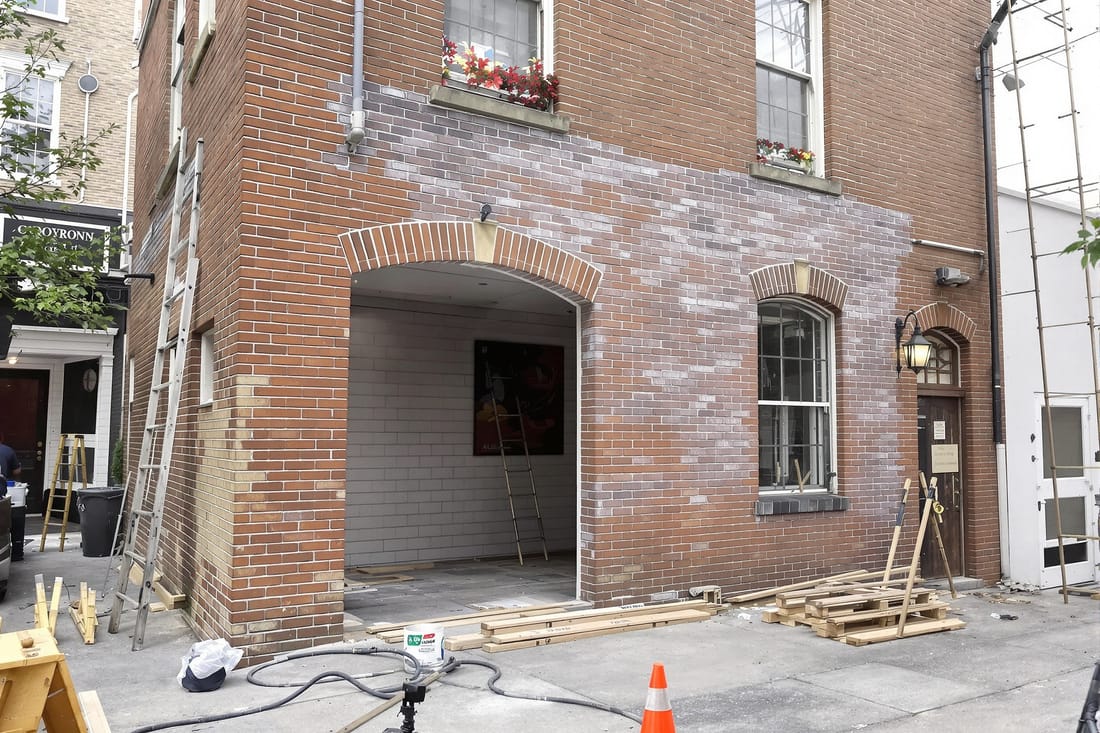
On older brick homes in neighborhoods like Grant Park or Inman Park, we often find several generations of mortar. The original soft lime-based joints may have been covered with hard Portland cement in the 1960s or 1970s. That harder mortar can trap moisture and push damage into the brick itself. Part of our assessment is taking small, careful samples to match the older mortar by color, hardness, and sand texture so the repaired areas look right and move correctly with the brick.
How historic masonry restoration work is actually done
Once we understand the building, we plan the work in phases so there are no surprises. For most historic masonry restoration projects in Atlanta, the core steps are cleaning, mortar repair, brick or stone repair, and moisture control.
Cleaning is always low and slow. We avoid harsh acids and high-pressure washing that can strip the protective outer surface of older brick. Instead, we use low-pressure water, mild detergents, and in some cases gentle masonry-specific cleaners applied by hand. For soot-stained chimneys or downtown facades, we may use a micro-abrasive method with a very fine media at low pressure to lift off pollutants without chewing up the brick. Cleaning comes first because it exposes hidden cracks and weak joints.
Repointing is the next big step. We remove failed mortar by hand or with small tools that are sized to the actual joint, so we are not widening original lines. On pre-World War II buildings, we usually use a lime-rich mortar, adjusted for Atlanta’s damp summers so it cures properly. We match the sand gradation and color, then pack the new mortar in layers to avoid shrinkage. Joints are tooled to match the original profile, whether it is concave, flush, or struck, so the wall sheds water the way it was designed to.
For damaged units, we decide whether to repair in place or replace. Brick that has only lost a thin face can sometimes be repaired with a mineral-based patch that bonds to the original surface and we texture and tint it to blend in. Severely spalled or fractured bricks are carefully cut out, and we use salvaged or custom-sourced brick that matches size, color, and firing style as closely as possible. For stone, we use dutchman repairs, which means we cut out only the damaged portion and insert new stone keyed into place.
Throughout the work, we control moisture. That might mean improving flashing at window heads, adjusting sloped sills, adding discreet through-wall weeps, or correcting grade where soil has built up against brick. We avoid blanket waterproof coatings that seal the wall too tightly. Instead, we use breathable treatments when they are truly needed so the masonry can still dry out in Atlanta’s humidity.
Costs, timelines, and what drives your budget
Historic masonry restoration is very detail-driven, and that is what affects cost the most. At Superior Masonry Atlanta, we walk you through the real variables upfront so you can prioritize.
Accessibility is a big factor. A one-story brick porch in Kirkwood might only need simple ladders or small scaffolds, while a three-story facade in Midtown can require full scaffolding or a swing stage system, plus sidewalk protection if we are downtown. More access equipment and safety measures add to labor time and permit costs.
Detail level also matters. Matching a straightforward running bond wall with standard joints costs less than replicating decorative arches, corbeling, or patterned brickwork. If your building has carved stone elements or ornamental terra cotta, expect more investigative time and more precise handwork.
Material matching plays a role. Basic lime-based mortar is cost-effective, but when we need custom mixes to match unusual colors or aggregate, there is extra lab and mockup time. Sourcing appropriate replacement brick for older Atlanta properties can also affect cost. If we can pull matching units from an on-site, hidden area or a local salvage yard, that is more efficient than ordering limited-run brick from a specialty manufacturer.
Scope of damage has obvious impact. A few localized cracks and open joints can often be handled in days. If entire elevations have failing mortar, bulging sections, or long-standing water damage, the project can run several weeks or more. In some Atlanta neighborhoods, we also have to coordinate around HOA requirements or historic district review, which can lengthen the overall timeline even if the on-site work window stays reasonable.
We provide written scopes that break down areas and tasks, so if you want to phase the work over multiple seasons, we can help you tackle the highest risk sections first, such as chimneys, parapets, and areas taking the most weather from southwestern exposure.
Atlanta-specific issues we solve in historic buildings
Older brick and stone buildings in Atlanta see a specific mix of problems, and we have built our process around those local realities.
Clay soil movement shows up as stepped cracking near corners or at the ends of long brick walls. We map and monitor these cracks, and if they are not active structural issues, we stabilize them with proper stitching techniques before repointing. Where settlement is ongoing, we coordinate with structural professionals so the masonry repairs do not get torn apart a few seasons later.
Freeze-thaw cycles are not as severe here as in northern states, but Atlanta’s winter swings can still cause trouble, especially where water sits in shaded joints or on flat caps. We often rebuild or re-cap parapet walls with properly sloped stone or brick and use compatible flashing so water moves off quickly. Chimneys are another common source of interior leaks. We re-bed and re-point chimney crowns, install or repair caps, and ensure flues are sealed where they penetrate the masonry.
In town, vehicle exhaust and urban pollutants dirty masonry faster. We use cleaning products that are strong enough to remove these deposits but tested not to burn or etch softer historic brick. For older homes repainted in the past, we sometimes have to deal with peeling or trapped paint layers. We test small areas with different strippers and removal methods to find an approach that removes paint without gouging the brick or driving residue deeper into joints.
Fire damage and smoke staining are also issues in historic fireplaces. We can restore fireboxes with firebrick and high-temperature mortar, repair smoke chambers, and address masonry cracks that were patched with improper materials. For exterior walls near old utility penetrations or outdated vents, we infill openings with matched masonry so the facade reads as one continuous surface again.
How Superior Masonry Atlanta protects historic character
Our goal is to preserve what is authentic about your building while making it stand up to Atlanta’s climate for decades. That means we do not treat historic masonry restoration like standard new construction work.
Before we touch the building, we document existing conditions with photos and notes on bond patterns, joint profiles, and any special details. On more sensitive projects, like century-old homes or buildings in local historic districts, we often build a small on-site mockup that shows the proposed mortar color, joint tooling, and cleaning results. You can approve that look before we proceed across the facade.
We work with traditional materials where they make sense. That usually means lime-based mortars that are softer and more flexible than modern structural mortars. They let moisture migrate through the joints instead of through the brick, and they are easier to repair again in the future. When we must use modern materials, such as stainless helical ties or improved flashings, we install them in a way that is concealed or visually minimal from the street.
Communication is steady from start to finish. We explain what areas we will open, what kind of dust or noise to expect on a given day, and how we will protect landscaping, walkways, and adjacent finishes. If we uncover hidden issues such as rotten embedded wood or voids behind the masonry, we stop, show you, and discuss options so you can make informed decisions.
Because we are based here in Atlanta, we understand local permitting, neighborhood expectations, and how our weather actually ages repaired masonry over time. The solutions we use on a shaded brick Craftsman in Candler Park might be different from a sun-baked commercial facade along Memorial Drive. Superior Masonry Atlanta treats every project as a one-off, because no two historic buildings in this city have the same story or the same needs.