Home › Commercial Tuckpointing and Masonry Repair
Superior Masonry Atlanta provides commercial tuckpointing and masonry repair for buildings across Atlanta, GA. We restore brick and stone facades, replace failing joints, and correct spalling or loose units to extend the life of your building envelope and improve safety.
Superior Masonry Atlanta provides professional commercial tuckpointing throughout Atlanta, GA, Georgia and the surrounding area. Our licensed, insured crew delivers safe, clean, on-time work with a free estimate before anything begins. Call (912) 454-5836 or request your free quote.
Commercial Tuckpointing for Atlanta Buildings
Superior Masonry Atlanta provides commercial tuckpointing for office buildings, retail centers, schools, churches, and multi family properties across metro Atlanta. Our focus is extending the life of your brick and stone exteriors while keeping your property looking professional for tenants, customers, and inspectors.
On a typical project, we start with a close visual survey of each elevation, parapet, and masonry penetration (like window heads, sills, and sign penetrations). We are looking for hairline cracking in mortar joints, open vertical joints, missing mortar, previous patchwork, and areas where water has been tracking behind the façade. We document this with photos and an elevation plan so owners and property managers clearly see what needs attention.
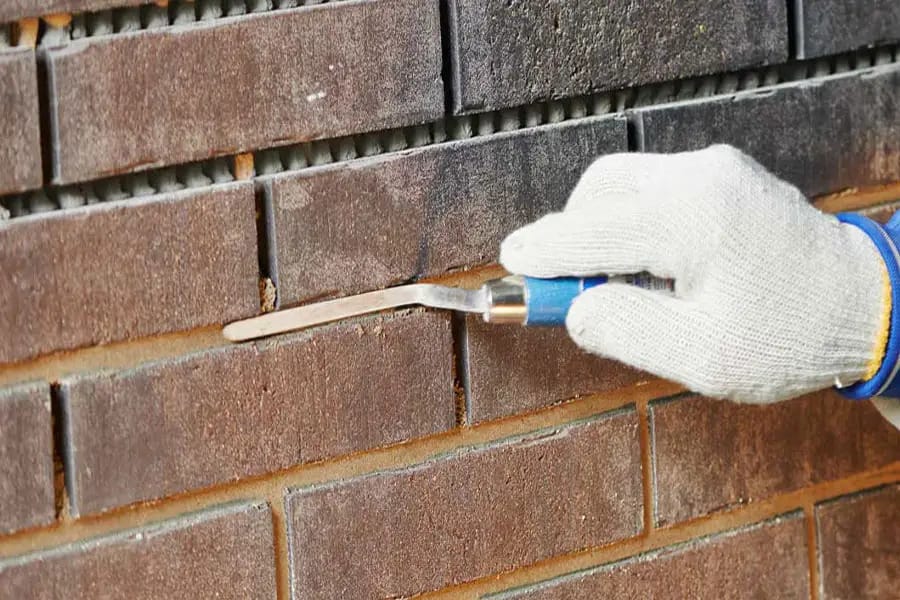
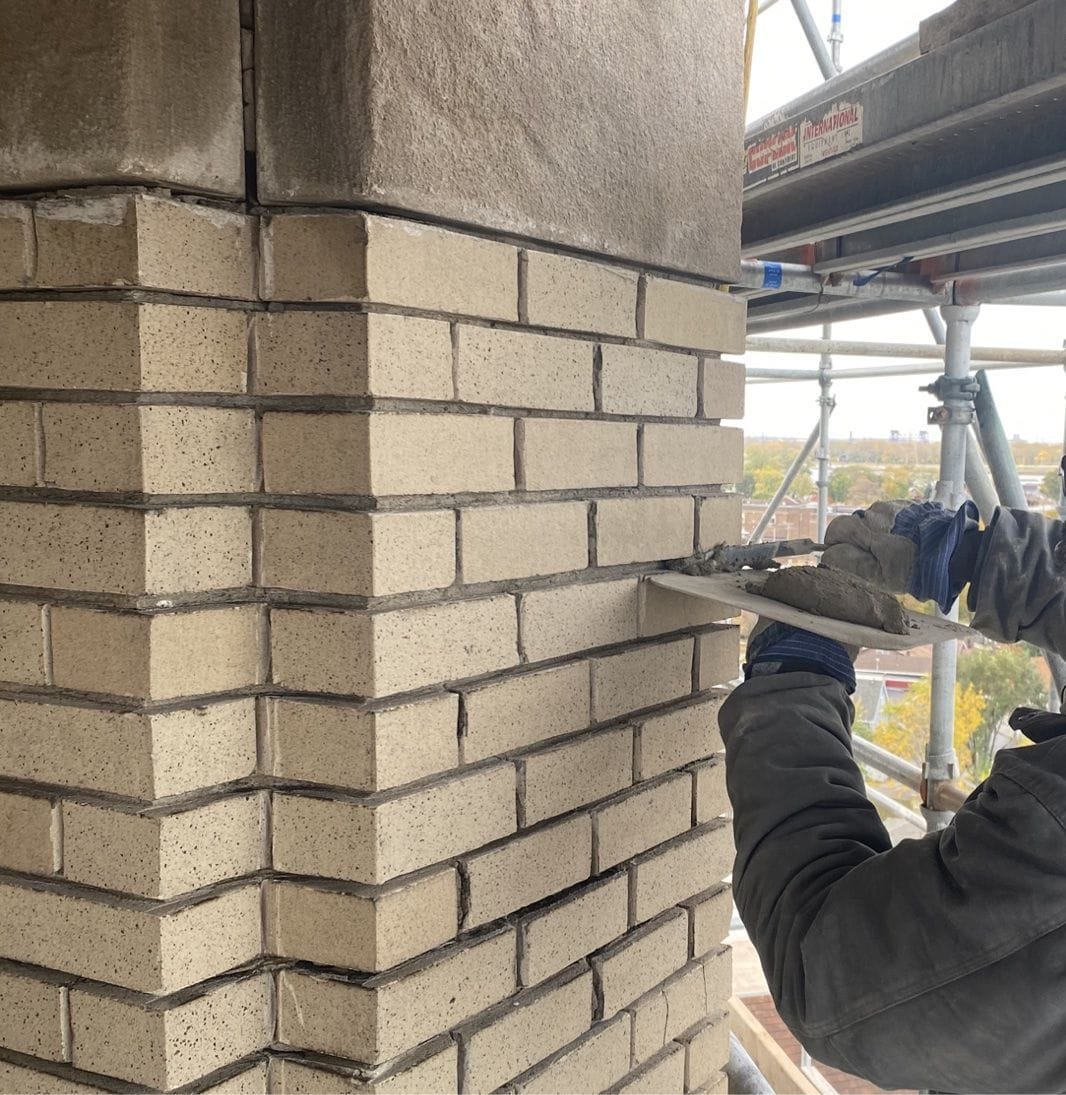
Commercial tuckpointing is not just smearing on new mortar. Our crews mechanically grind or route out deteriorated mortar to a specific depth, usually 2 to 2.5 times the joint width, so the new mortar has enough surface to bond. We then dust and flush the joints, often with low pressure air and water, to remove fines that would keep the new mortar from adhering. Only after this preparation do we install new mortar matched to the original in color, texture, joint profile, and strength.
How We Match Mortar and Protect Your Structure
Matching mortar correctly is one of the main reasons commercial building owners call Superior Masonry Atlanta. If new mortar is too hard, it can cause the brick to crack around it. If it is too soft, the repair will fail early. For most older Atlanta buildings, we run a mortar analysis to determine if the original was lime rich or cement heavy, and we select mix proportions to be compatible.
We maintain a library of locally available sand blends and pre blended masonry cements commonly used in Atlanta projects from the 1970s onward. On site, we mix small test batches, create sample joints in a discreet area, and allow them to dry before final approval so you are not surprised by color shifts once the wall cures. We also match joint tooling, whether the existing joints are concave, V joint, flush, or struck.
During work, we protect adjacent materials. Aluminum storefront frames, glass, EIFS, and painted steel are covered so they are not etched by cleaning solutions or stained by mortar. On high visibility commercial façades, we will sequence work in sections so your tenant entrances remain open, coordinating with your property manager to avoid peak business hours.
Commercial Masonry Repair: Beyond the Mortar Joints
Commercial tuckpointing often uncovers deeper issues, so our team is trained to address the full scope of masonry repair. In Atlanta, we commonly see brick veneer walls where shelf angles have rusted, causing step cracking and displacement above windows or at floor lines. We can expose, clean, prime, and in many cases replace corroded angles in coordination with a structural engineer.
We also repair spalled bricks, cracked block, and displaced stone units. Instead of surface patching, we cut out damaged units to clean, square openings, then install new brick or CMU chosen to match the existing size, color blend, and texture. Where exact matches are no longer manufactured, we blend new units in less conspicuous locations and reuse salvaged originals in highly visible areas.
For water infiltration issues, we inspect flashing at window heads, sills, control joints, and roof interfaces. Many Atlanta commercial buildings built in the 1980s and 1990s have minimal through wall flashing, which leads to hidden moisture in the wall cavity. We can retrofit new flashing sections, add weep vents, and re seal masonry control joints to create a system that sheds water instead of trapping it. All of this is coordinated with your roofing or glazing contractors when needed.
What Drives the Cost of Commercial Tuckpointing in Atlanta
Property managers often ask why one elevation is more expensive than another. The largest cost driver is access. A one story retail strip along Peachtree Industrial typically can be handled with lifts and simple fall protection, while a multi story office tower downtown may require engineered swing stages, rooftop rigging, and night or weekend work around street closures. We always price access solutions transparently so you see how they affect the budget.
The percentage of joints that need removal and replacement also affects cost. On some Atlanta façades, only 10 to 20 percent of joints are failing, which allows for selective tuckpointing. On older brick warehouses converted to loft offices, nearly 80 to 100 percent of joints may need replacement, which becomes more cost effective on a per square foot basis but requires a larger overall budget.
Mortar matching and material complexity matter too. Specialty colored mortars or historic lime based mixes take more labor to get right. If the work must be phased to keep a retail center fully operational, we account for mobilizing equipment multiple times. We provide written scopes that break out elevations and alternatives, such as doing the worst sides this year and the remaining elevations in a scheduled maintenance plan, so you can align the project with your capital budget.
Local Considerations for Atlanta Commercial Properties
Working in Atlanta means working within local codes, permitting requirements, and property management rules. Superior Masonry Atlanta is familiar with the needs of buildings inside the City of Atlanta, as well as surrounding municipalities like Sandy Springs, Decatur, and Brookhaven. For larger exterior repairs that affect structural elements or alter the appearance of a building, we coordinate with your architect or engineer when a permit set is required.
In busy districts like Midtown, Buckhead, and around major hospitals and campuses, sidewalk encroachment, lift placement, and lane closures may trigger permit or right of way requirements. We help owners plan the work schedule and access so disruptions are minimized and documentation is in place. For mixed use properties and HOA controlled commercial condominiums, we attend board or owner meetings when requested to explain scope, sequencing, and safety measures.
Atlanta’s climate also affects how and when we work. Mortar requires certain temperature and moisture conditions to cure properly. We plan tuckpointing and masonry repair around expected rainfall and cold snaps, and we use cold weather protection when needed so your repairs are not weakened by premature freezing or rapid drying. This attention to timing helps reduce efflorescence, shrinkage cracking, and other issues that can show up months after a rushed job.
Our Process and How to Get Started
When you contact Superior Masonry Atlanta about commercial tuckpointing or masonry repair, we begin with a site visit and discussion about your building’s history, leak reports, and any prior façade repairs. We may request existing drawings if available, which helps us understand the wall system and any structural shelf angles, relieving angles, or cavity wall details that will influence the repair.
Next, we create a written condition report that identifies locations, describes the observed damage, and outlines specific repair methods such as depth of mortar removal, tuckpointing mortar type, brick or block replacement quantities, crack stitching, or flashing upgrades. For more complex properties, we can provide elevation markups with color coded repair areas so you and your ownership group can quickly grasp the scope.
Once approved, we schedule work around your tenant operations. We use clear signage, caution tape, and overhead protection where needed to keep pedestrians safe. Daily cleanup is standard so your property does not look like a construction zone for weeks at a time. At completion, we walk the building with you, note any touch ups, and provide recommendations for ongoing maintenance, such as future sealant replacement or periodic façade inspections every 3 to 5 years, to keep your masonry system performing for decades.